
- Your cart is empty Browse Shop
Top Picks
Best Cat Trees for Indoor Cats (2026 Complete Guide)
How to choose a stable, space-smart cat tree your cat will actually use plus our top-rated picks.
Indoor cats need vertical space just as much as they need cozy beds. A well-designed cat tree provides climbing, scratching, perching, and a sense of territory all in one structure. Without it, furniture often becomes the alternative.
In this guide, we break down what actually matters when choosing a cat tree: height, stability, materials, and layout. Whether you live in a small apartment or have multiple cats at home, these picks are selected based on durability, real-world feedback, and everyday usability.
Why Indoor Cats Need a Cat Tree
Indoor cats naturally seek vertical territory. In the wild, climbing allows cats to observe their surroundings, feel secure, and establish a sense of control over their environment. Even inside the home, that instinct doesn’t disappear.
A well-designed cat tree provides elevated resting spots, scratching surfaces, and structured climbing paths. This combination supports physical exercise, claw health, and mental stimulation all essential for indoor cats that don’t have access to outdoor exploration.
Without a proper vertical outlet, cats may redirect their energy toward furniture, curtains, or countertops. A stable cat tree gives them an appropriate space to stretch, scratch, perch, and relax throughout the day.
Providing vertical space isn’t just about entertainment — it’s about supporting your cat’s natural behavior in a healthy and structured way.
Types of Cat Trees (Tall vs Compact vs Multi-Level)
Not all cat trees are built the same. The right choice depends on your space, your cat’s size, and how they naturally like to climb and rest.
Tall cat trees (70”+) are ideal for active cats and larger breeds that enjoy full-body stretching and elevated perches. These models provide multiple levels, giving cats space to climb upward and claim higher territory.
Tall cat trees (70”+) are ideal for active cats and larger breeds that enjoy full-body stretching and elevated perches. These models provide multiple levels, giving cats space to climb upward and claim higher territory.
Compact cat trees work best in apartments or smaller rooms where floor space is limited. While shorter in height, a well-designed compact tree can still offer scratching posts, a perch, and a cozy resting spot without overwhelming the room.
Multi-level towers with condos and hammocks are great for multi-cat households. They create separate zones for climbing, hiding, and lounging, reducing competition and giving each cat its own space.
Choosing the right type starts with observing how your cat already behaves do they climb furniture, seek high shelves, or prefer lower cozy corners? Matching the tree to their habits increases the chances they’ll actually use it daily.
Multi-level towers with condos and hammocks are great for multi-cat households. They create separate zones for climbing, hiding, and lounging, reducing competition and giving each cat its own space.
Choosing the right type starts with observing how your cat already behaves do they climb furniture, seek high shelves, or prefer lower cozy corners? Matching the tree to their habits increases the chances they’ll actually use it daily.
Materials & Stability: What Matters Most?
Material quality plays a major role in how long a cat tree will last and whether your cat will feel confident using it.
Most cat trees combine sisal-wrapped posts for scratching and plush or carpeted platforms for lounging. Sisal is preferred for durability and claw health, while soft surfaces provide comfort for resting. Higher-end models may include engineered wood or reinforced particle board for added structural strength.
Most cat trees combine sisal-wrapped posts for scratching and plush or carpeted platforms for lounging. Sisal is preferred for durability and claw health, while soft surfaces provide comfort for resting. Higher-end models may include engineered wood or reinforced particle board for added structural strength.
Stability is equally important. A tall tree that wobbles can discourage use and even become unsafe. Look for:
- A wide, heavy base
- Thick support posts
- Securely wrapped sisal (not loosely glued rope)
- Reinforced connection points between levels
For larger or very active cats, weight capacity and structural rigidity matter even more. A well-built cat tree should feel solid and stable during jumping, climbing, and stretching.
Investing in a sturdy structure ensures long-term use and prevents your cat from returning to scratching furniture.
How to Choose the Right Height & Layout
Height and layout determine how much your cat will actually use the tree. Some cats prefer climbing as high as possible, while others are more comfortable at mid-level platforms.
When choosing a cat tree, consider:
- Ceiling height and available floor space
- Your cat’s size and weight
- Number of cats in the household
- Preference for open perches vs enclosed condos
Tall trees (70 inches or more) are excellent for active cats that enjoy climbing and surveying the room from above. Shorter trees work well in apartments and still provide scratching and lounging options.
For multi-cat homes, look for models with staggered levels and separate resting spots. This helps reduce territorial tension and gives each cat its own comfortable space.
The best layout matches your cat’s natural climbing habits not just the look of the tree.
Our Top-Rated Cat Trees for Indoor Cats
Best Value
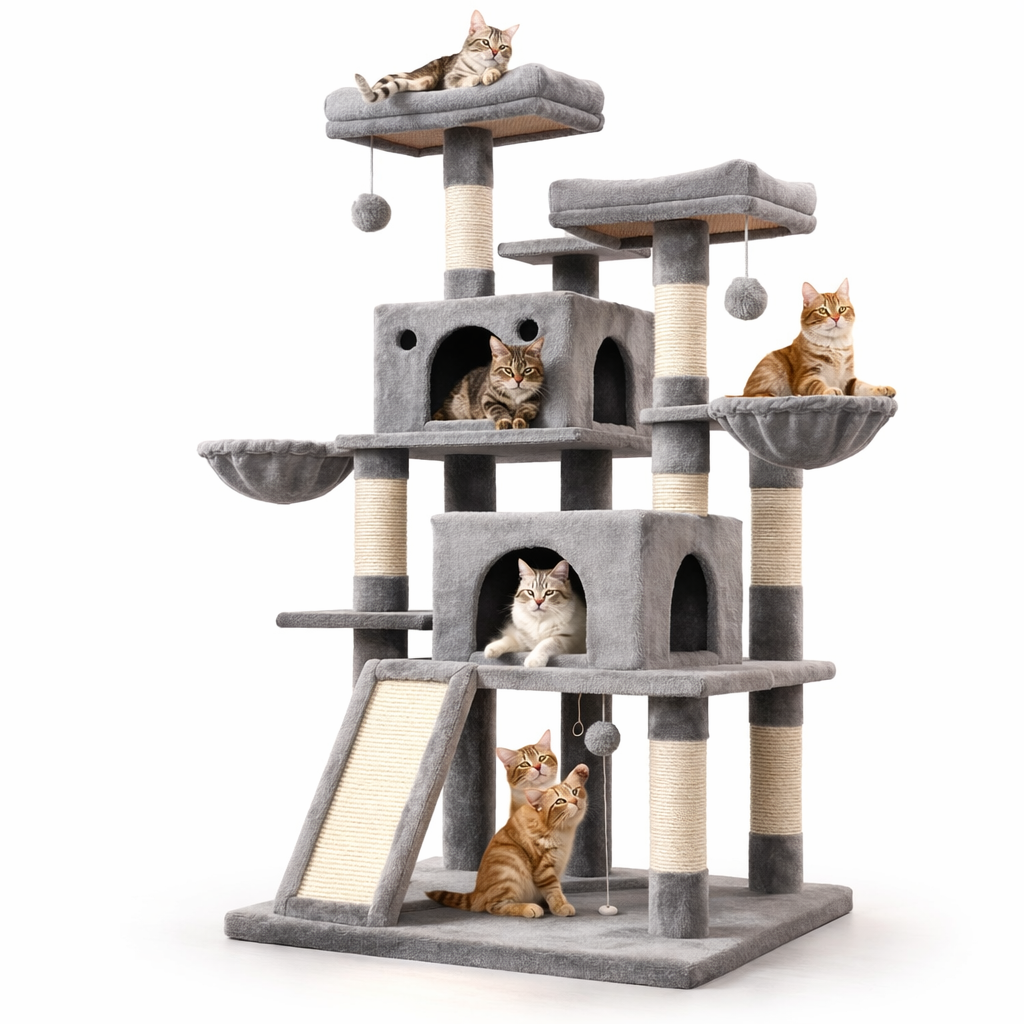
Modern Multi-Level Cat Tree
Stable, stylish, and cat-approved
Balanced height for climbing and lounging
Sturdy base to reduce wobbling
Sisal posts support healthy scratching
Multiple platforms for perching and rest
Design Pick
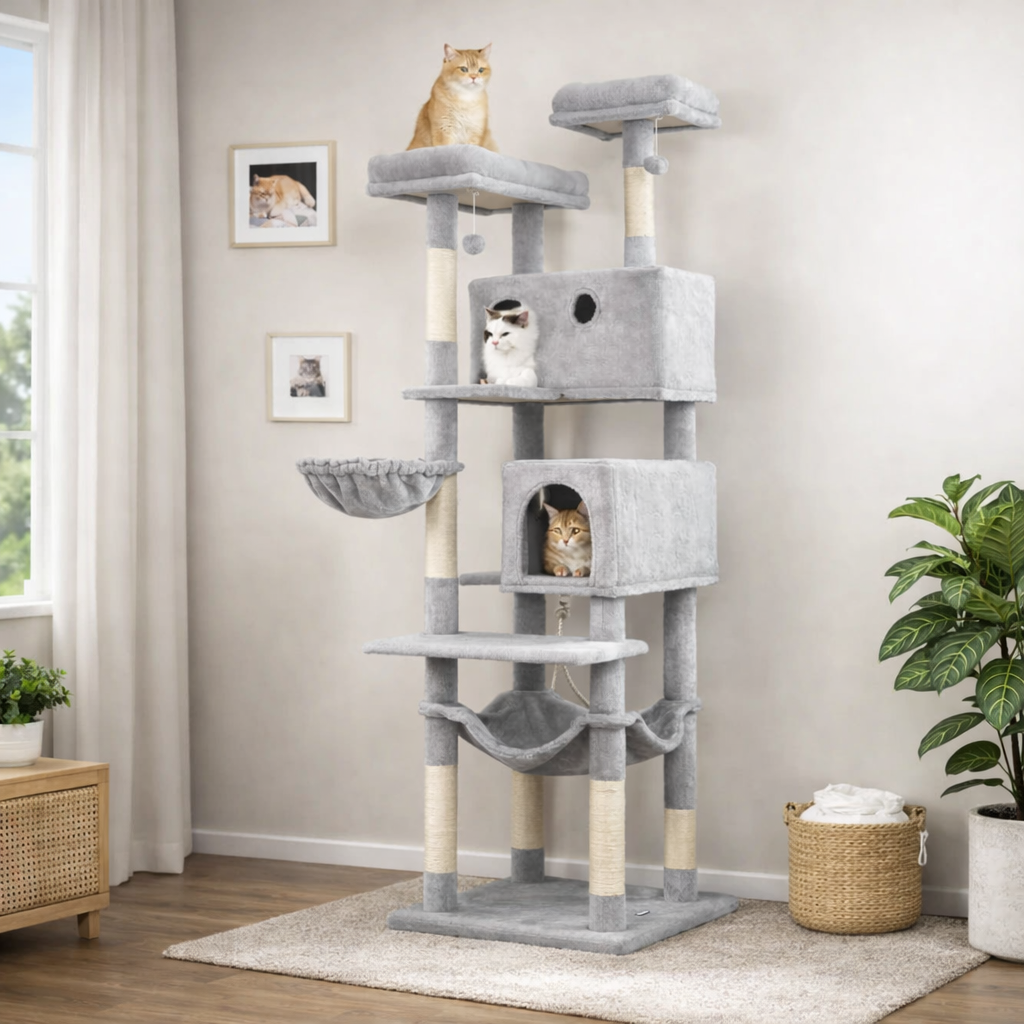
Tall Cat Tree 70”
Full-body stretch + extra stability
70”+ height for vertical climbing and stretching
Thicker posts for better stability
Multiple levels for active cats
Great choice for larger breeds
Premium Pick
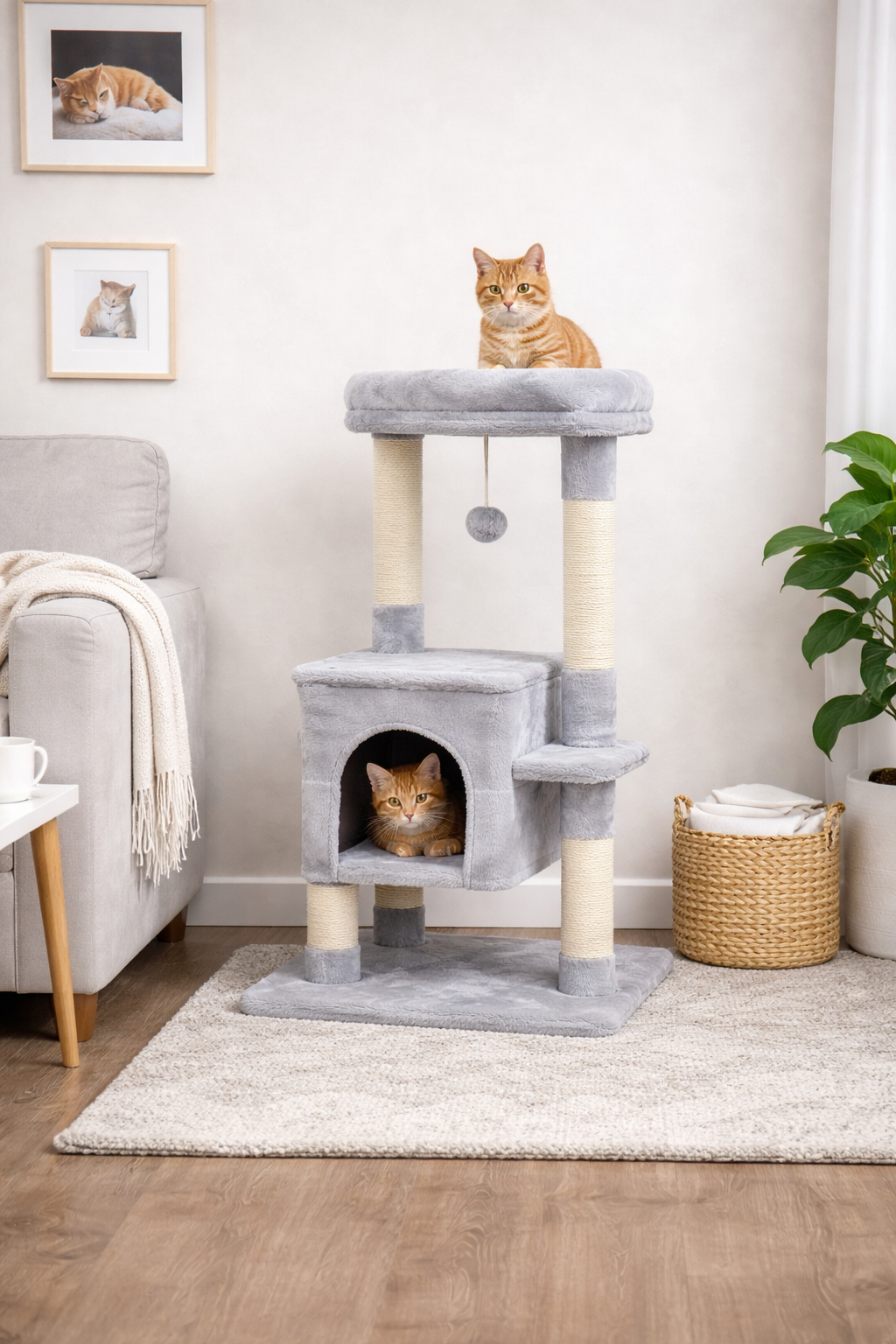
Compact Cat Tree
Space-saving with essential features
Compact footprint ideal for apartments
Includes scratching post and perch
Lightweight yet stable design
Budget-friendly option for indoor cats
Modern Multi-Level Cat Tree (Best Overall) – Full Review
Who It’s Best For
Most indoor cats, especially those that enjoy climbing, lounging, and having a stable “home base” in the room. This style is ideal if you want a balanced tree that fits typical living spaces without going extremely tall.
It’s also a great pick for cat parents who want a sturdy everyday tree that supports both play and rest.
Material & Durability
Look for a solid base, thick posts, and securely wrapped sisal that won’t unravel quickly. A well-built multi-level tree should feel stable during jumping and climbing, with platforms that don’t wobble.
Soft surfaces are great for comfort, but durability depends on how well the fabric is attached and how strong the joints are between levels.
Soft surfaces are great for comfort, but durability depends on how well the fabric is attached and how strong the joints are between levels.
Why We Like It
- Balanced height for daily use
- Stable design that reduces wobbling
- Multiple platforms for perching and rest
- Sisal posts support healthy scratching
If you want one cat tree that works well for most indoor cats, this “best overall” style is usually the safest and most practical choice.
Tall Cat Tree 70”+ (Best for Large Cats) – Full Review
Who It’s Best For
This tall cat tree is ideal for large breeds or highly active indoor cats that love climbing to elevated spots. Cats that naturally seek shelves, cabinets, or tall furniture will benefit from the extra height and vertical territory.
It’s also a strong option for multi-cat households, where additional levels help reduce competition and give each cat their own perch.
It’s also a strong option for multi-cat households, where additional levels help reduce competition and give each cat their own perch.
Material & Durability
Because of its height, stability is critical. Look for a wide, heavy base and thick support posts that prevent wobbling during jumping.
Reinforced connection points between levels and tightly wrapped sisal posts are especially important in tall models, as they endure more impact and movement.
For larger cats, checking weight capacity and structural sturdiness is essential.
Reinforced connection points between levels and tightly wrapped sisal posts are especially important in tall models, as they endure more impact and movement.
For larger cats, checking weight capacity and structural sturdiness is essential.
Why We Like It
- Extra height for full-body stretching
- Ideal for large or highly active cats
- Multiple platforms for climbing and rest
- Encourages healthy vertical exploration
If your cat constantly seeks the highest spot in the room, a tall tree like this provides a safer and more structured alternative.
Compact Cat Tree (Best for Kittens & Small Apartments) – Full Review
Who It’s Best For
This compact cat tree is ideal for kittens, small cats, or apartments where space is limited. It offers a simple vertical layout with one cozy condo and a cushioned top perch perfect for cats that enjoy short climbs and secure resting spots without needing a large multi-level tower.
Because of its smaller footprint, it works especially well in bedrooms, small living rooms, or studio apartments.
Because of its smaller footprint, it works especially well in bedrooms, small living rooms, or studio apartments.
Material & Durability
This model features plush fabric covering and sisal-wrapped scratching posts designed for light to moderate scratching. While it’s not built for very large or highly active cats, it provides stable support for kittens and small adult cats.
The square base helps reduce wobbling, and the enclosed condo offers a soft, secure sleeping space.
The square base helps reduce wobbling, and the enclosed condo offers a soft, secure sleeping space.
Why We Like It
- Compact footprint ideal for apartments
- Perfect size for kittens or small cats
- Soft enclosed condo for secure naps
- Lightweight and easy to reposition
If you’re short on space but still want your cat to climb, scratch, and rest comfortably, a compact tree like this offers a practical and space-saving solution.
🐾
How We Choose the Best Cat Trees
We don’t select cat trees based on appearance alone. Our recommendations are based on structural stability, material durability, layout design, and real-world usability in indoor homes.
Each model was evaluated using the following criteria:
Each model was evaluated using the following criteria:
- Base stability and resistance to wobbling
- Quality of sisal posts and scratching surfaces
- Height and vertical climbing potential
- Platform layout and resting space distribution
- Suitability for apartments or multi-cat homes
We prioritize trees that cats consistently use over oversized models that look impressive but feel unstable. Our goal is to recommend options that support healthy scratching, climbing, and perching behaviors while fitting naturally into indoor living spaces.
Frequently Asked Questions
What size cat tree should I choose?
Choose a cat tree based on your cat’s size and your available space. Larger cats benefit from taller, sturdier trees with wider platforms, while smaller cats can comfortably use compact models. Always ensure the base is stable enough to prevent wobbling.
How tall should a cat tree be?
For active indoor cats, trees that are 60–75 inches tall provide better vertical stimulation and full-body stretching. In apartments or smaller rooms, shorter trees can still offer scratching and perching benefits without overwhelming the space.
Are cat trees necessary for indoor cats?
While not mandatory, cat trees provide important vertical territory, scratching surfaces, and resting spots. They help reduce furniture scratching and support natural climbing behavior.
How do I keep a cat tree stable?
Place the tree against a wall for added support, ensure all bolts are tightened properly, and choose models with wide, heavy bases. Stability is especially important for tall trees and larger cats.
How often should I replace a cat tree?
With proper use, a quality cat tree can last several years. Replacing worn sisal posts or tightening loose hardware can extend its lifespan significantly.
Choosing the right cat tree can make a noticeable difference in your cat’s daily routine. From climbing and scratching to resting and observing, a well-built structure supports natural behavior while protecting your furniture.
Our recommendations focus on stability, durability, and practical design so you can invest in a cat tree that fits your space and keeps your indoor cat active, comfortable, and confident.
Cart (0 items)