
- Your cart is empty Browse Shop
Top Picks
Best Heated Cat Beds for Winter and Senior Cats (2026 Complete Guide)
Give your cat the warm spot it is always hunting for, plus our top heated bed picks for 2026.
If your cat sleeps on the router, flattens itself against the radiator, or steals your chair the second you stand up, it is not being difficult. Cats run warmer than we do and are most comfortable around 86 degrees, so an average home in winter feels chilly to them all day long. Senior cats feel it most: cold stiffens arthritic joints, and many older cats start sleeping poorly or hiding in odd warm corners.
A heated bed solves the problem at the source. It gives your cat a spot that is always the warmest place in the house, eases stiff joints for seniors, and keeps outdoor and garage cats safe when the temperature drops. This guide explains how heated beds work, what makes them safe, and the three we recommend for 2026. For those outdoor cats, a cat tracker collar is the other half of cold-weather safety: it tells you whether they made it back to the warm bed at all.
Our Top-Rated Heated Cat Beds
Best Value
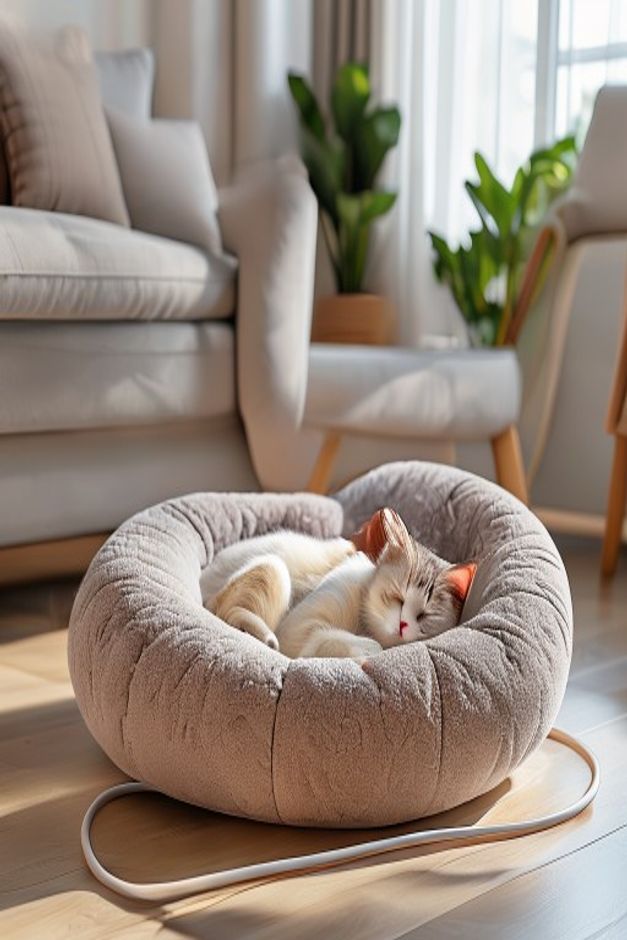
Electric Heated Cat Bed
Best all-around warmth
- Warms to body temperature
- Only 4-6 watts of draw
- Auto-regulating thermostat
- Chew-resistant steel cord
- Removable washable cover
Design Pick
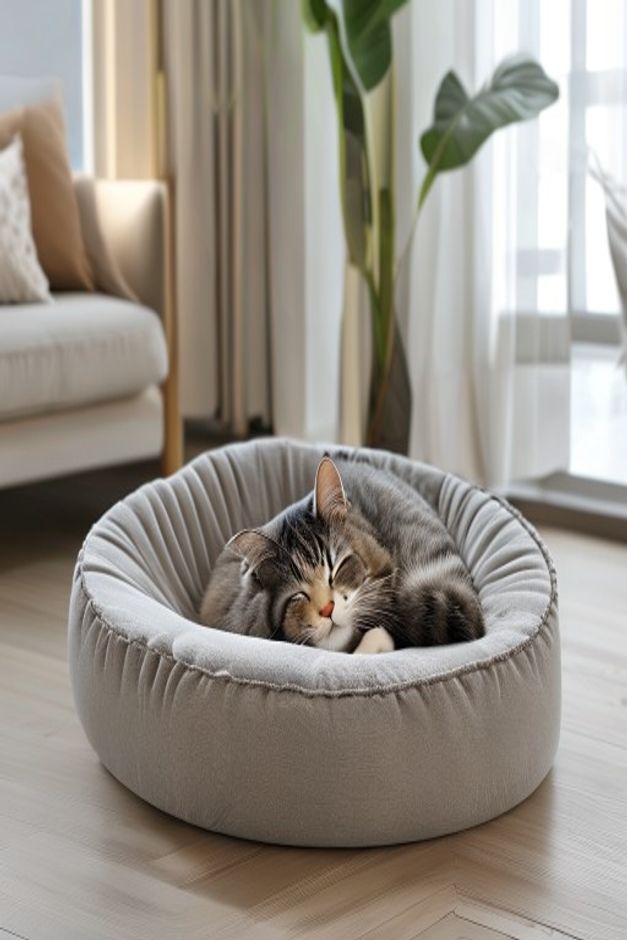
Self-Warming Cat Bed
Best cord-free comfort
- No cord, no outlet needed
- Reflects the cat's own heat
- Safe for chewers and kittens
- Works anywhere in the house
- Light and easy to move
Premium Pick
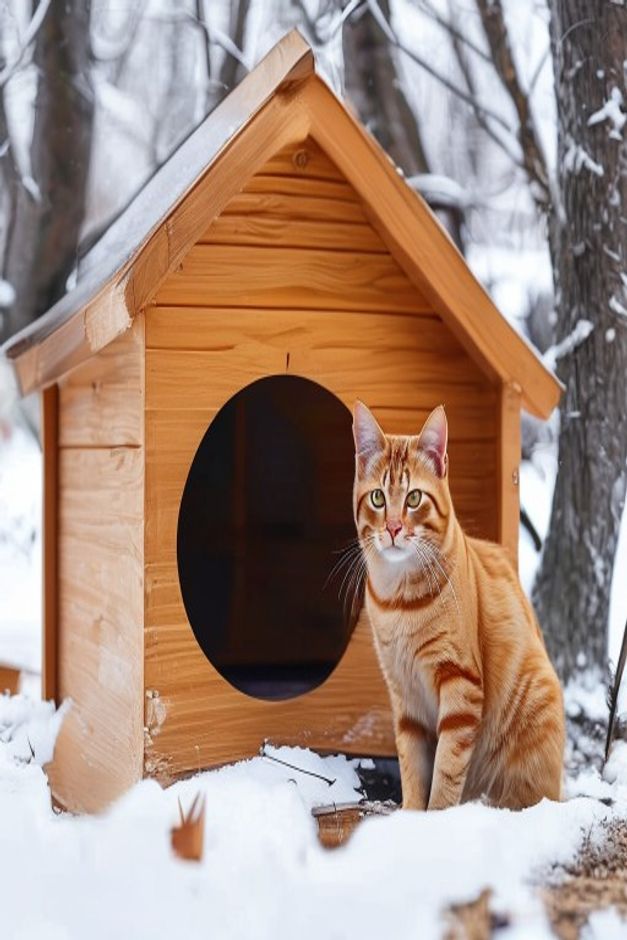
Outdoor Heated Cat House
Best for outdoor cats
- Insulated weatherproof shell
- Outdoor-rated heated pad
- Raised floor stays dry
- Door flap blocks wind
- Safe through freezing nights
Why Cats Crave Heat More Than You Think
A cat’s thermoneutral zone, the range where its body rests without burning extra energy, starts around 86 degrees Fahrenheit. Most homes sit 15 to 20 degrees below that, which is why your cat migrates from sunbeam to laptop to your lap all day. Sleeping 12 to 16 hours a day, a cat spends most of its life looking for one thing: a reliably warm surface.
For senior cats, warmth is closer to medicine than luxury. Gentle heat relaxes muscles and eases the arthritic joints that most cats over ten quietly live with, and veterinarians often suggest a warm bed as the first comfort measure. Thin cats, hairless breeds like the Sphynx, and cats recovering from illness also struggle to hold body heat and benefit the most.
Electric, Self-Warming or Outdoor: The Three Types
Electric heated beds plug in and use a low-wattage element that warms to your cat’s body temperature when it lies down, the strongest and most consistent heat. Self-warming beds have no cord at all: a reflective layer bounces the cat’s own body heat back, adding several degrees of coziness anywhere you put the bed. Outdoor heated houses combine an insulated shelter with a weatherproof heated pad, built to keep porch, garage, and feral cats safe through freezing nights.
Heating Elements, Thermostats and What Is Actually Safe
The word electric next to the word pet makes people nervous, and it should make you read specs. A well-made heated cat bed is a very tame appliance; a cheap one is not worth the savings.
Good electric beds draw only 4 to 6 watts, less than a nightlight, and use an internal thermostat that idles a few degrees above room temperature, then rises to about 100 to 102 degrees, a cat’s natural body temperature, only when the cat is actually lying on it. The cord should be wrapped in chew-resistant steel, and the bed should carry an MET or UL safety listing on the label, not just in the marketing copy.
Covers matter too: look for a removable, machine-washable cover, because a heated bed becomes the most-used object your cat owns. For self-warming beds the core is a mylar or foil layer under padding; quality shows in whether the layer stays quiet and flat after months of kneading instead of crinkling itself into a corner.
How to Choose the Right Heated Bed
Match the bed to your cat’s age, sleeping style, and where it will live. A few checks separate a bed that gets claimed on day one from one that gets ignored.
Look for: A size your cat can curl into with sides to lean on, most cats prefer 16 to 20 inches. Low wattage with an auto-regulating thermostat, not a manual dial. A steel-wrapped cord and MET or UL listing on electric models. A removable washable cover. For outdoor houses, real insulation, a raised floor, and a pad rated for outdoor use. A non-slip base so the bed stays where the cat left it.
Placement does half the work: put the bed in a draft-free corner your cat already sleeps in, not in the busiest room of the house. A heated bed in the wrong spot loses to a cold bed in the right one.
With the types and safety checks covered, here are the three heated beds we recommend for most cat owners in 2026.
Electric Heated Cat Bed - Full Review
Who It is Best For
The electric heated bed is the right call for senior cats with stiff joints, thin or short-haired cats in cold climates, and any cat that spends winter glued to the radiator. If your home drops below 68 degrees or your cat is over ten, this is the version that changes their day the most.
Inside is a low-wattage element with an internal thermostat that idles gently and only reaches full body temperature under the cat’s weight. Quality models wrap the cord in coiled steel, carry an MET or UL listing, and pair the element with orthopedic foam. The heating unit typically outlasts several covers.
Material & Durability
Wash the cover on the machine’s gentle cycle, wipe the pad, and check the cord seasonally like you would any appliance. Most owners retire these beds after years of nightly use, not because the heat fails but because the cat wore out the plush.
Why We Like It
Consistent warmth no sunbeam can match. Costs pennies a month to run. Visibly eases stiff senior cats within days. Becomes the cat’s permanent address in winter.
For steady, safe, thermostat-controlled warmth, nothing else in this guide competes. If you buy one heated product for an indoor cat, make it this one.
Self-Warming Cat Bed - Full Review
Who It is Best For
The self-warming bed suits cats that chew cords, kittens, homes without a spare outlet, and anyone who wants to add warmth to a favorite spot without electricity. It is also the travel-friendly option: same cozy physics in a carrier, a closet, or a rental.
Material & Durability
Under the plush sits a thermal layer, usually mylar, that reflects the cat’s own body heat back up through the padding. There is nothing to break or burn out; durability comes down to stitching and whether the reflective core stays flat and quiet through months of kneading and washing.
Why We Like It
Zero electricity and zero cord anxiety. Adds a noticeable few degrees of warmth. Safe in any room including the garage. Usually the cheapest bed in this guide.
It will not match an electric bed in raw warmth, but for young healthy cats in a moderately heated home the self-warming bed hits the sweet spot of cozy, safe, and inexpensive.
Outdoor Heated Cat House - Full Review
Who It is Best For
This one is for the cats that cannot come inside: porch cats, barn cats, garage cats, and the neighborhood feral you have been quietly feeding. Once nights approach freezing, a bowl of food is not enough; an insulated, heated shelter is what actually gets a cat through winter safely.
Material & Durability
Look for a rigid insulated shell that sheds rain, a raised floor that stays off cold concrete, and a door flap that blocks wind. The heated pad inside must be rated for outdoor use with a steel-wrapped cord, thermostat-controlled just like indoor models. Seams and flap hinges are what fail first on cheap houses.
Why We Like It
Keeps outdoor cats safe in freezing weather. Insulation works even during power outages. Raised dry floor prevents the worst of winter. One house often becomes the whole colony’s headquarters.
If an outdoor cat depends on you, this is the most meaningful purchase in the guide. It is more product than an indoor cat needs, but for winter nights outside it is the difference that matters.
How We Choose the Best Heated Cat Beds
Heat plus pets is a category where corner-cutting shows, so our ranking starts with safety and ends with whether cats actually sleep in the bed:
MET or UL safety listing and a steel-wrapped cord on every electric pick. Thermostats that warm only under the cat, never a bed that runs hot around the clock. Wattage low enough to run all winter for pennies. Covers that survive real washing machines. Insulation and weatherproofing that hold up outdoors. And the cat test: beds that get claimed in the first week and stay claimed.
We skip manual-dial heating pads made for humans; they run too hot for an animal that sleeps 14 hours a day. Everything we recommend regulates itself to feline body temperature.
Frequently Asked Questions
Is it safe to leave a heated cat bed on all the time?
Yes, if it is a purpose-built pet bed with an auto-regulating thermostat and a safety listing. These beds idle barely above room temperature and only warm up under the cat’s body, drawing less power than a nightlight. What is not safe is a human heating pad on a manual setting; those run far too hot for unattended animal use.
How warm does a heated cat bed actually get?
A good electric bed idles 10 to 15 degrees above room temperature and rises to about 100 to 102 degrees, matching a cat’s own body heat, when the cat lies down. It should feel barely warm to your hand; your palm runs cooler than a cat and is a poor thermometer. Self-warming beds add a gentler few degrees by reflecting body heat.
Electric or self-warming: which should I get?
Electric for seniors, thin cats, cold houses, and anyone whose cat visibly seeks heat all day; the consistent warmth is worth the cord. Self-warming for kittens, cord-chewers, mild climates, and spots without an outlet. Plenty of households end up with one of each: electric in the winter spot, self-warming everywhere else.
Will my cat actually use a heated bed?
If your cat already hunts warm spots, almost certainly. Put the bed exactly where the cat sleeps now, near the radiator or that sunny corner, and let it discover the warmth on its own. Moving the favorite blanket into the new bed helps it smell like home; most cats claim it within a few days.
Build out the cozy corner with our guides to the best cat beds, best cat window perches (including heated perches), and best cat trees.
One placement trick: in winter, position the heated bed a few feet from the radiator or vent your cat already uses. The cat gets the warmth it wanted with the safety and joint support the radiator never offered, and the switch happens on its own.
Your cat spends most of its life asleep, and it would rather spend those hours warm. Match the bed to your cat, an electric bed for the senior by the radiator, a self-warming donut for the kitten, an insulated house for the porch cat, and you have solved the thing your cat works hardest at every single day.
Keep Exploring
Related guides from vphGoods: Best Cat Beds · Best Senior Cat Products · Best Cat Window Perches
Cart (0 items)